How to Prevent Cold Chain Breakdowns in Hospital Storage
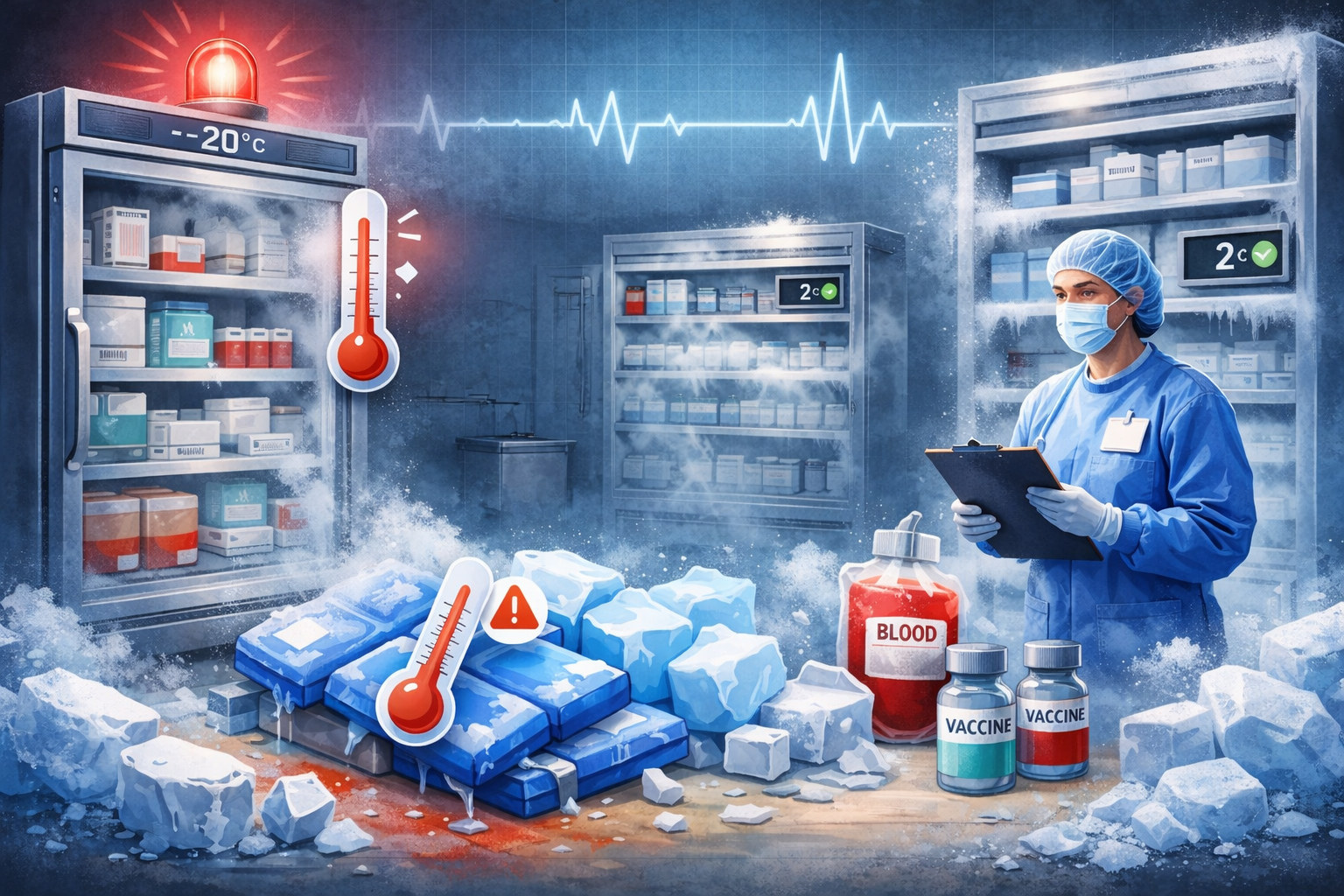
In hospital environments, cold chain integrity is not just operational, it is clinical.
Vaccines, biologics, blood products and temperature-sensitive medicines depend on strict storage conditions. Even a short temperature excursion can compromise efficacy, trigger compliance issues and result in costly product disposal.
Yet cold chain failures still happen.
Why breakdowns occur
Most incidents are not caused by catastrophic equipment failure. They are caused by:
- Delayed detection of temperature deviations
- Manual logging gaps
- Power interruptions without immediate alerts
- Poor visibility across multiple storage locations
- Lack of centralized oversight
In many facilities, temperature is still checked periodically. The problem? Deviations happen in minutes, not during inspection rounds.
Without continuous monitoring, risk becomes invisible.
What effective prevention looks like
Preventing cold chain failures requires shifting from periodic control to continuous monitoring.
1. Real-Time monitoring of critical equipment
Refrigerators, freezers, pharmacy storage rooms, blood banks and laboratories should be monitored 24/7 with automated data logging.
Continuous monitoring ensures:
- Immediate detection of deviations
- Faster corrective action
- Complete traceability for audits
- Reduced product loss
2. Intelligent alarm management
Speed matters. Alerts must be:
- In real time
- Escalated if unresolved
- Delivered through multiple channels
An alarm seen too late is an alarm that failed.
3. Reliable, calibrated sensors
Accuracy is essential in narrow ranges such as 2–8°C or ultra-low temperatures. Certified and regularly calibrated sensors are fundamental to data integrity and regulatory compliance.
4. Centralized oversight across departments
Hospitals often manage dozens, sometimes hundreds, of monitored points across different departments.
A centralized monitoring platform provides:
- Full operational visibility
- Standardized reporting
- Audit-ready documentation
- Reduced administrative workload
From compliance to risk control
Cold chain monitoring should not be treated as a regulatory checkbox. It is a risk management strategy.
Continuous, automated monitoring transforms temperature control into:
- A documented process
- A measurable KPI
- A proactive maintenance tool
- A safeguard for patient safety
In today’s healthcare environment, prevention is not about reacting faster. It is about ensuring deviations are detected the moment they occur, before they become incidents.
Cold chain integrity is not optional. It is foundational.

Read More blogs
.png)
.svg)

.png)
.png)