Cold Chain Validation in Pharmacies: A Practical Guide to Complying with RD 782/2013
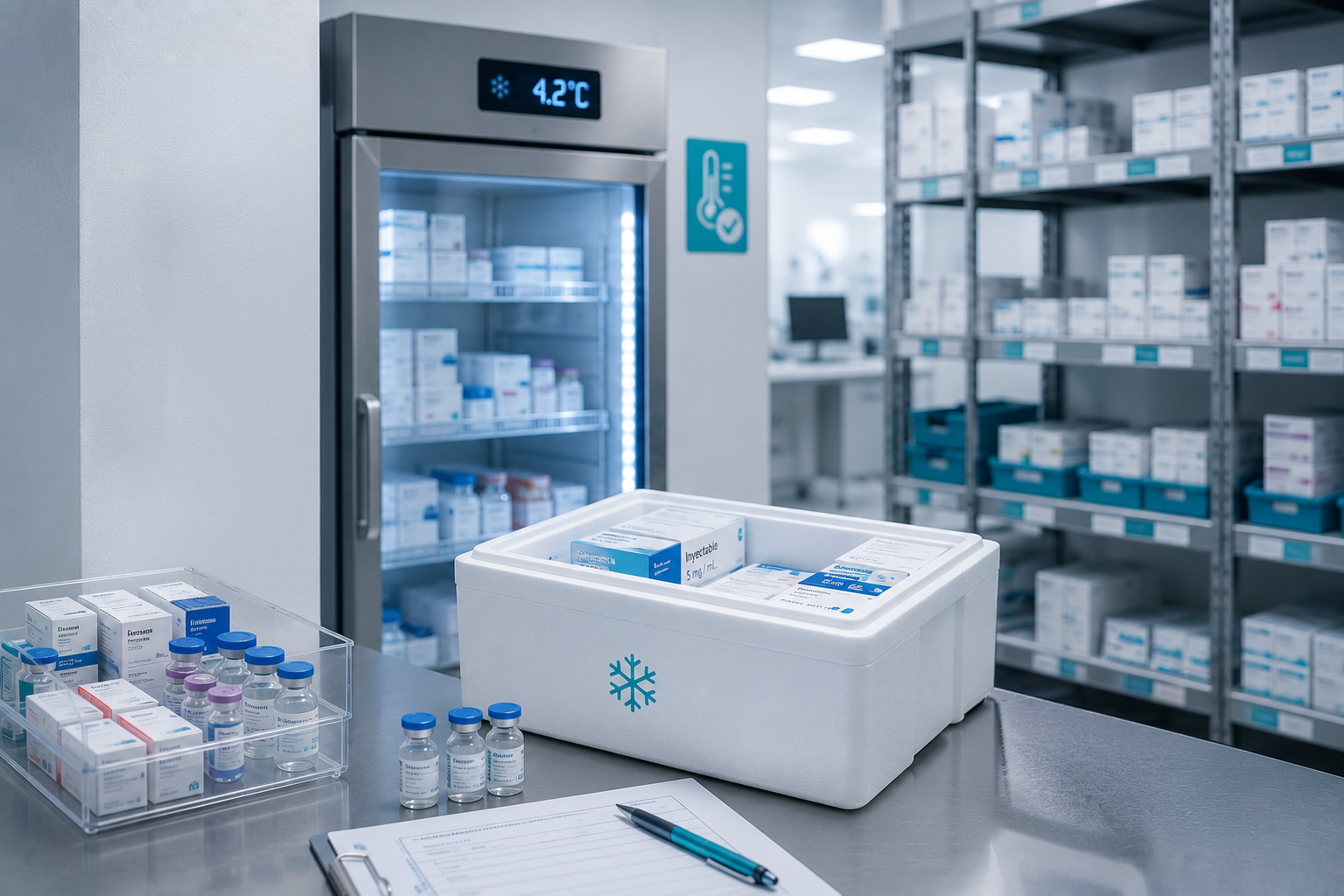
Every year, pharmacies and distribution warehouses in Spain lose stock, and credibility with health inspectors, due to cold chain breaks that go undetected until it's too late. The good news is that cold chain validation no longer depends on spreadsheets or manual rounds with a thermometer: there is a clear regulatory framework and tools that automate compliance. This guide explains what Spanish law requires, what it really means to validate a cold process, and how to simplify it.
What Royal Decree 782/2013 says
Royal Decree 782/2013, on the distribution of medicines for human use, establishes that the manufacturing laboratory or wholesale distributor is responsible for ensuring that transport and storage take place under adequate conditions, including temperature. This falls under Good Distribution Practices (GDP), which require that any computerized systems used to demonstrate compliance be properly validated.
In practice, this means it is not enough to simply have a thermometer in the fridge. A pharmacy or hospital must be able to demonstrate, with traceable records, that temperature stayed within the required range throughout the medicine's entire journey: from the distributor's warehouse to the point of dispensing.
What it really means to validate the cold chain
Validating a refrigeration process is not just about buying certified equipment. It includes, at minimum: design qualification (DQ), confirming that the refrigeration equipment and monitoring system are designed for their intended use; installation qualification (IQ), verifying that sensors, fridges and receivers are correctly installed and calibrated; thermal mapping, to identify hot and cold spots inside chambers and fridges and know where to place sensors; continuous monitoring, with uninterrupted temperature and humidity logging and automatic alerts on deviations; and documented traceability, with audit-ready reports that demonstrate historical compliance without manually reconstructing the data.
The risks of still doing it manually
Paper records or spreadsheets share three recurring problems: temperature breaches are detected hours or days after they happen, there are no real-time alerts that allow action before stock is lost, and preparing for an audit means hours of manual work reconstructing the temperature history.
How real-time monitoring makes compliance easier
A monitoring platform like ViGIE tackles all three problems at once: continuous sensors measure temperature and humidity in fridges, chambers and rooms, and send the data to the cloud over radio frequency, with no manual intervention; instant alerts via SMS, email, app notification or phone call warn the team as soon as a threshold is exceeded, allowing action before the medicine is compromised; and automated reports generate GDP and RD 782/2013 compliance documentation ready for any inspection, with no manual data reconstruction.
Quick checklist for your pharmacy
Before your next audit, check whether you can answer yes to these questions: do you know the exact moment the last temperature deviation occurred in your chamber or fridge, without having to check paper records? Does someone on the team receive an automatic alert when temperature goes out of range, even outside working hours? Can you generate a GDP compliance report for the last 12 months in minutes, not days? Are your sensors calibrated and their thermal mapping documented? If any answer is no, it is time to automate.
RD 782/2013 is not just a bureaucratic requirement: it protects the effectiveness of medicines and patient safety. Automating cold chain validation with real-time monitoring not only makes regulatory compliance easier, it also reduces stock losses and frees the pharmacy team from repetitive manual tasks.
Want to see how ViGIE's cold chain monitoring works in your pharmacy? Request a demo at vigiesolutions.com/contact-us.

Read More blogs
.png)
.svg)

.png)
.png)